Selecting skateboard trucks may seem challenging, but generally speaking, if you purchase from a reputable skateboard truck producer and choose the right size for your deck, you're likely to be satisfied with your purchase. When buying a complete skateboard, the trucks are already installed and appropriately matched to the deck width.
Overview

Understanding the Components of a Skateboard Truck
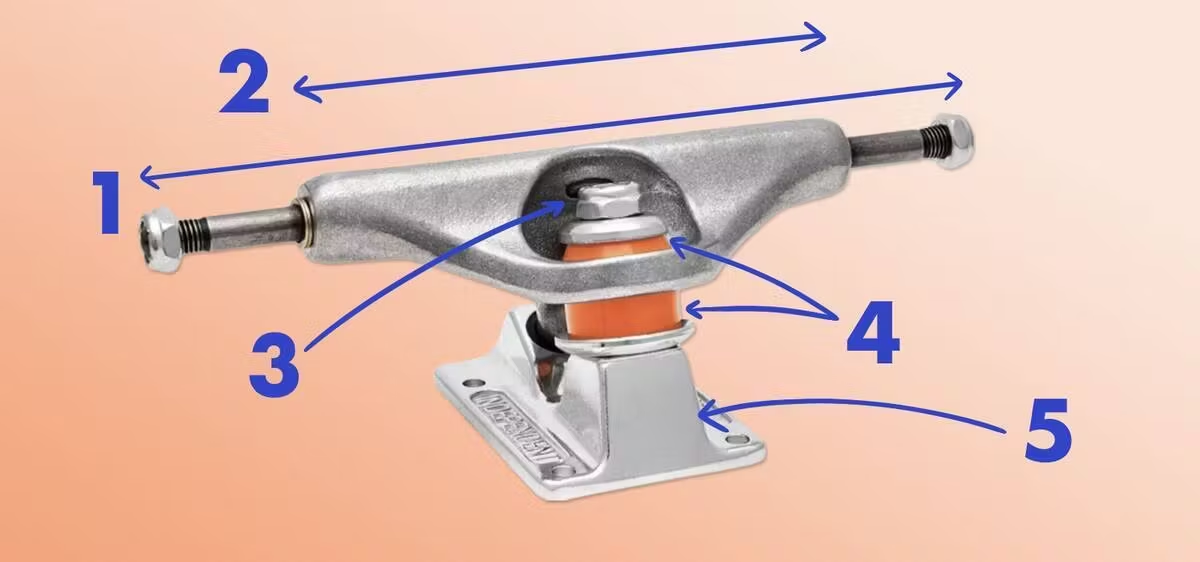
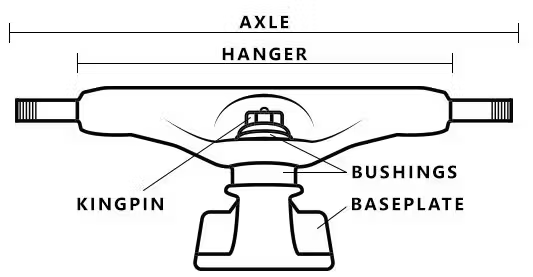
We'll delve into specifics shortly, but first, what exactly are skateboard trucks? They are the T-shaped metal pieces affixed to the underside of the skateboard deck, responsible for holding the wheels. They consist of a baseplate and a hanger that work together by rotating or pivoting, secured by a kingpin bolt which also holds the bushings. Let’s examine the primary parts of a skateboard truck:
Baseplate
The baseplate, fixed with four bolts to the deck, serves to evenly distribute the skater's weight across the truck for stability and also absorbs landing impacts for the deck. It contains the pivot cups, essential for smooth turns, as they allow the hangers to pivot. As the connection point between deck and hanger, the baseplate is a crucial element of your entire setup.
Hanger
The largest element of a skateboard truck, the hanger, is a metal bar that tapers to a triangular shape at the pivot end, fitting into the baseplate’s pivot cup. As they directly contact surfaces like rails and ledges, hangers are essential for executing grind tricks.
Axle
Inside the hanger runs the wheel axle, which is threaded at both ends where nuts secure the wheels. The tips may wear over time, especially from rail stands, but they can be rethreaded using the right tools. Many T-tools come with 5/16" axle rethreaders. If rethreading has been needed before, consider a skate tool with this feature. Browse our options here:
Kingpin
A kingpin is a sizeable bolt in the truck’s centre, securing all truck components together. Adjustable with the kingpin nut, it controls the truck tightness. Though they can break from stress, kingpins are replaceable.
Bushings for Trucks
Bushings are the rubber-like cushions between the baseplate and hanger. They convey pressure from the skater's feet to the hangers, thus affecting the setup's responsiveness. The firmness of bushings influences turning as follows:
- Harder bushings: Result in stiffer, steadier trucks, beneficial for reducing wobble but requiring effort to turn.
- Softer bushings: Ideal for carving, cruising, and those who favour quick-responding, loose trucks.
Learn how to fit skateboard bushings, or discover new bushings, washers, and hardware:
Now that you know what makes up a skateboard truck, let’s look at what to consider when selecting the right trucks for your board.
Dimensions of Skateboard Trucks & Measuring Guide
Trucks are sized by width and height. Below is a foundation to help you select the suitable size of skateboard trucks.
Width of Skateboard Truck
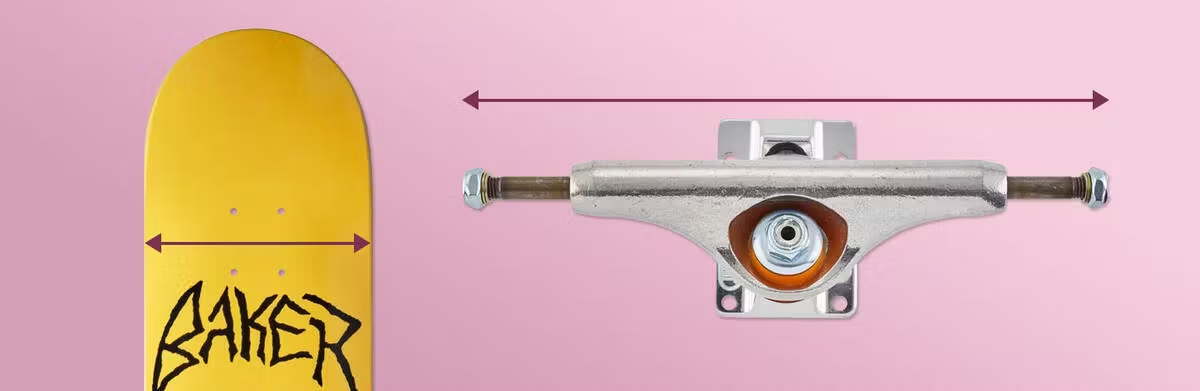
Matching the truck width with your deck’s width is imperative. Deviations cause instability if too narrow or impede movement if too wide. Truck width is usually denoted by the hanger width excluding axle width, but overall truck width should match your deck width.
At SkatePro, we list the axle width for each truck, eliminating the need for conversion charts.
Height of Skateboard Truck

Truck height measures the space from the baseplate to axle centre. It affects both deck-to-wheel and deck-to-ground distances.
Trucks are usually classed as high, medium, or low, detailed as follows:
- Low Trucks (46-49 mm): Suitable for beginners or shorter individuals, it lends a stable feel and ease of control. Avoid using wheels above 53 mm without risers.
- Medium Trucks (49.5-53.5 mm): These offer versatility, fitting most riders. Ensure wheels stay under 56 mm unless risers are added.
- High Trucks (53.5-60mm): Permit larger wheels, facilitating cruising and carving through increased distance between deck and wheels, beneficial for freestyle skating with broader balance zones.
Truck heights are specified in our truck details.
Considerations for Truck Height Selection
Height choice is subjective, influenced by your skating style and physique. Key points to ponder include:
- Wheel clearance: For those favouring looser trucks or deep turning, adequate wheel gap is necessary to avoid wheel bite.
- Pop angle: The height affects the pop angle; lower trucks respond quicker, while higher trucks offer better trick leverage.
- Pushing distance: Greater height means less comfort over extended pushes.
- Trick compatibility: High trucks ease balancing for certain tricks; lower trucks favour flips.
- Weight: Larger trucks exert more weight.
- Skater height: Those with longer legs may handle high trucks better.
Using Riser Pads to Modify Truck Height and Prevent Wheel Bite

For skateboarders dealing with wheel bites, riser pads are useful as they elevate the deck above the wheels, quickly resolving the issue.
When exploring larger wheel sizes or slackening trucks, riser pads might also come in handy.
Check out our riser pad selection if you aim to resolve wheel bite or wish to modify your setup’s features:
Ensure the correct bolts are used with riser pads. Refer to this guide for bolt length details:
Weighing the Options: Heavy vs. Light Skateboard Trucks
A large part of your complete skateboard’s weight lies in the trucks, and much of the modern innovation in truck design revolves around weight reduction. This is achieved through hollow kingpins, axles, and alternative materials.
The Tensor Mag Light Series currently holds the title of “lightest trucks ever” and offers benefits for trick executions. Yet, weight is but one of many truck features.
Note the correlation between truck dimensions and their heft; bigger trucks inherently weigh more.
Adjusting Truck Tightness: Loose vs. Tight Trucks
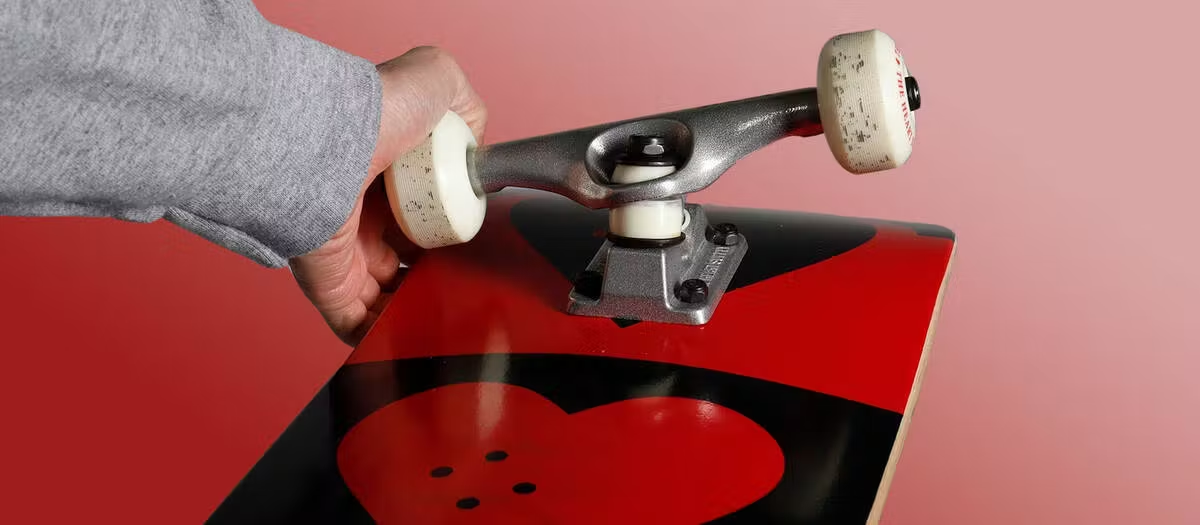
To tweak your truck’s tension, use a skate tool, wrench, or spanner on the kingpin nut. Tighter settings improve stability; looser settings increase agility.
Consider tightening if:- Wheel bites occur during moves.
- You desire consistent pop.
- The board feels unsteady at speed.
- Turns require lifting the front wheels.
- You require quicker turns.
- You seek lateral freedom of movement.
Your bushings’ hardness also influences turning and carving, with higher durometer bushings resulting in tighter trucks. Check out our bushing range:
- Skateboard Bushings
- Guide: Adjust Your Trucks for Better Control
- Skateboard Bushings - All You Need to Know
Fitting Skateboard Trucks
```To secure the trucks, use four nuts and four bolts for each one. We suggest the bolts be tightened in a crosswise fashion to ensure even pressure across the baseplate's surface.
We are consistently prepared to assist: