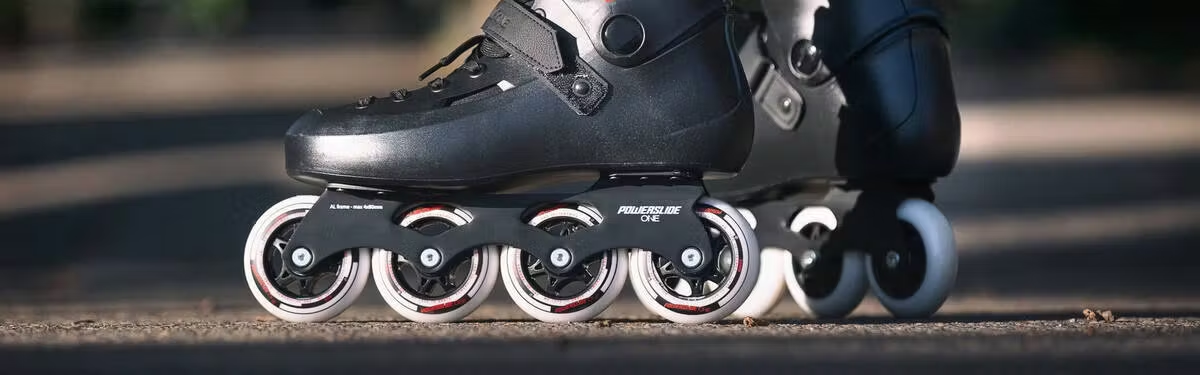
- Wheel size: Influences both speed and manoeuvrability.
- Durometer: Relates to wheel hardness – impacting speed and vibration dampening.
- Rebound: Describes the speed at which the wheel returns to its original form after compression.
- Grip: Indicates the level of traction the wheel provides on various surfaces.
- Wheel profile: Determines speed and stability.
Overview

Overview
How to Select the Right Inline skate Wheels?
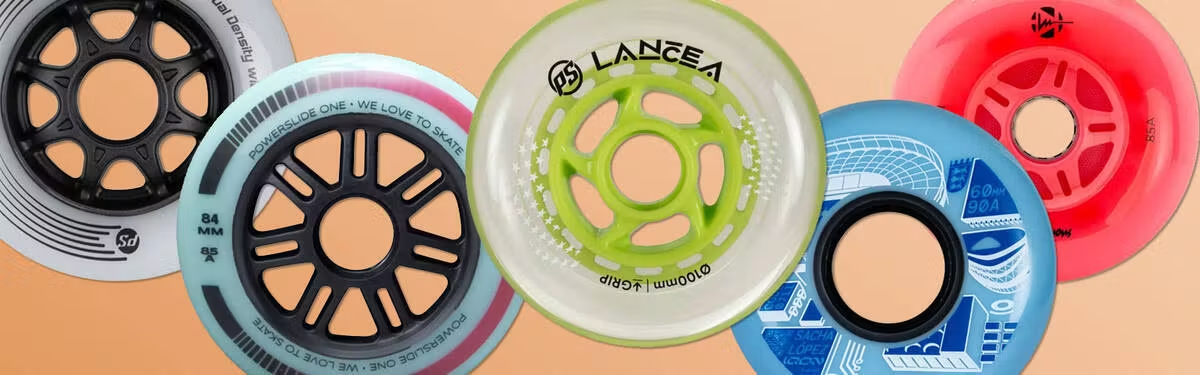
Selecting appropriate inline skate wheels becomes straightforward once you understand the recommended wheel type for your particular skating style.
Regardless of your inline skating approach, focus on aligning the wheel size and hardness with the intended skating surfaces.
| Inline Skating Style | Properties | Size Range / Hardness Range |
| Fitness Skate Wheels |
Smooth roll Power transfer
|
80-110 mm 80A-88A |
| Freeskate Wheels |
Agile and fast |
75-110 mm 84A-88A |
| Aggressive Skate Wheels |
Stable and shock-absorbing Small size Flat or round profiles |
55-80 mm 88A-95A |
| Roller Hockey Wheels |
Agile and grippy Good acceleration Some are indoor-specific |
65-84 mm 72-84A
|
| Speed Skate Wheels |
Maximum speed Indoor / rinks / outdoor / roads |
100 mm-125 mm 83A-90A |
Ensuring Compatible Wheel Selection for Inline skates
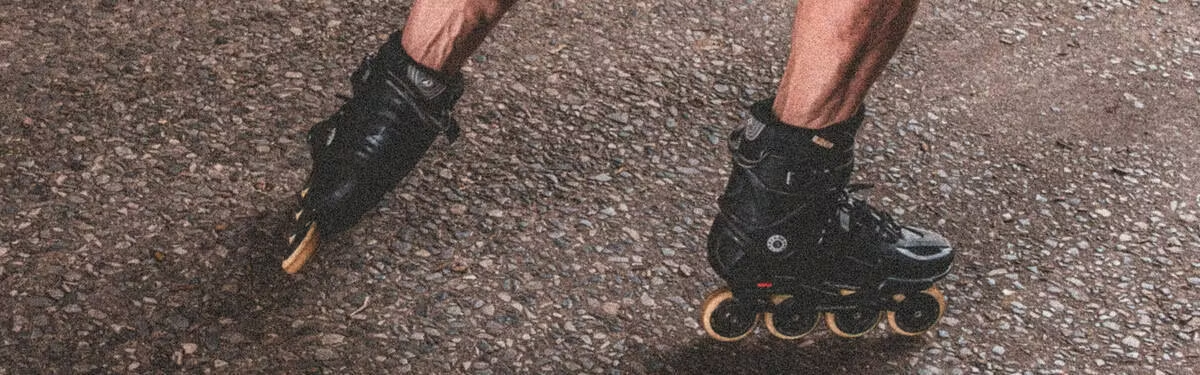
Inline skate wheels typically have a standard width of 24 mm, facilitating the search for wheels that suit your skates. You can fit any wheel that is equal to or smaller than the maximum diameter your frames allow.
Understanding factors like hardness, rebound, grip, and profile enables you to choose wheels that not only fit but enhance the performance of your skates as well.
Continue exploring to gain more insights, or directly explore our range:
Diameter - The Size of Inline skate Wheels
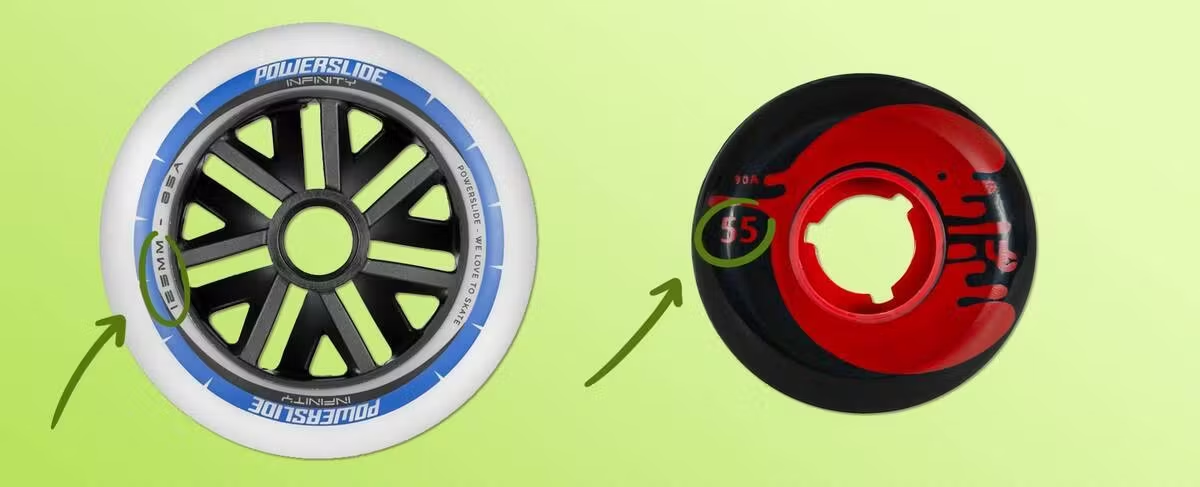
The diameter of inline skate wheels is expressed in millimeters (mm) and often marked on the wheel's sidewall. If uncertain, use a ruler or caliper to measure it directly.
The size of the wheels plays a significant role in their behaviour. Elements such as acceleration, speed, handling, and directional stability are directly impacted by wheel size.
Here's how the diameter affects performance:
- Smaller diameter: Offers better acceleration and control.
- Larger diameter: Provides higher speeds and improved stability in direction.
Each skating style has a typical size recommendation, which we summarise in the chart below:
Inline skate Wheels Size chart
| Inline Skating Style | Size Range |
| Aggressive Skate Wheels | 55-80 mm |
| Roller Hockey Wheels | 65-84 mm |
| Fitness Skate Wheels | 80-110 mm |
| Freeskate Wheels | 75-110 mm |
| Speed Skate Wheels | 100-125 mm |
Durometer - Hardness of Inline skate Wheels
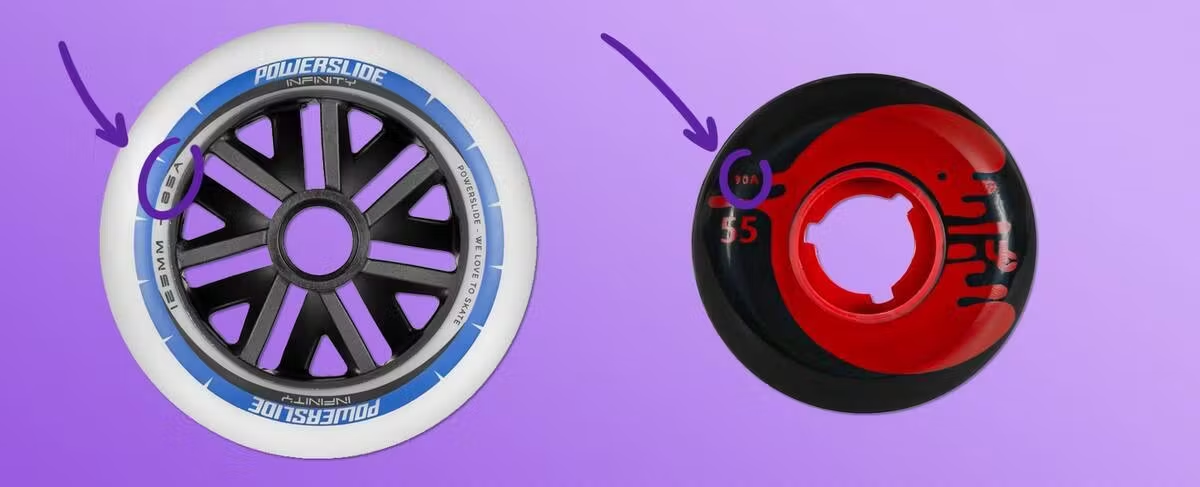
Wheel hardness, commonly gauged using durometer scales, is a critical factor for rollerblade wheels. The A-scale is prevalent for denoting durometer ratings, with a higher number (e.g., 82A) indicating a harder wheel.
This easily distinguishes the hardness and typically, the durometer is clearly labelled on the wheel.
The optimal hardness varies by skating style, with followi...
Wheel hardness determines performance across different surfaces and conditions, a factor that must be considered for the best skating experience.
Hardness Impact on Wheel Performance
Recognising how hardness modifies wheel performance is pivotal when assessing two wheels with similar attributes but different durometer ratings.
- Enhanced speeds
- Increased longevity
- Reduced grip
- Diminished vibration absorption
- Superior grip
- Exceptional shock absorption
- Lower speeds
- Less durability
Generally, softer wheels excel in vibration absorption and grip. Conversely, harder wheels provide reduced grip and less vibration absorption.
Alternative Hardness Indicators
Certain brands utilise the footprint scale for hardness rating. The conversion to the A-scale is as follows:
- F0 - equivalent to around 88A
- F1 - equivalent to around 85A
- F2 - equivalent to around 84A
- F3 - equivalent to around 83A
Rebound Characteristics of Inline skate Wheels
The wheel's ability to rapidly regain shape after being compressed defines its rebound. During skating, this plays a crucial role; higher rebound aids speed retention.
High-quality wheels are often associated with a high rebound, sometimes marketed with SHR urethane (Super High Rebound). Although no universal rating exists, high-end, costlier wheels generally possess better rebound than budget counterparts.
Grip Characteristics for Inline skate Wheels
The grip feature of inline wheels stems chiefly from the polyurethane (PU) formulation of the rubber, with hardness playing a crucial role.
The relationship between grip and hardness follows:
- Softer wheels: Increase grip.
- Harder wheels: Reduce grip.
Grip requirements adapt to surfaces: smoother surfaces need greater grip, whereas on rugged surfaces, harder wheels suffice due to inherent traction.
Wheel Profiles for Inline skates
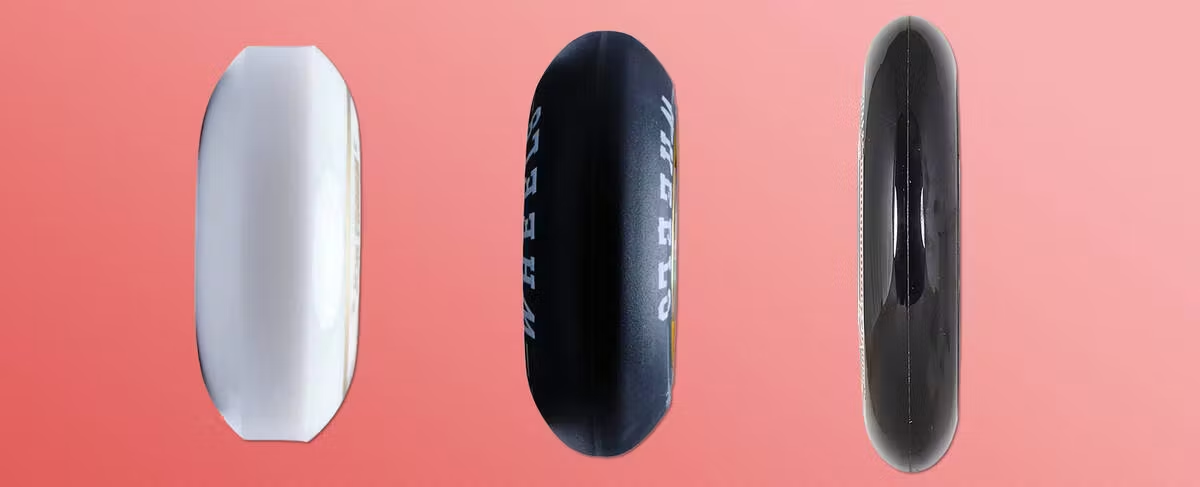
Varying from flat to pointy, the wheel profile dictates contact area. Flat profiles spread contact, whereas pointy profiles minimise it.
Pointy profiles pervade wheels for diverse skating types, enhancing efficiency by reducing friction and resistance, preferred for speed-focussed skating.
Flat profiles, pivotal for aggressive skating, offer stability crucial for trick landings.
Rounded profiles, common in freeskating and trick setups, aid in manoeuvrability and mitigate wheel bite, assisting novices.
Construction of Inline skate Wheels - Hubs
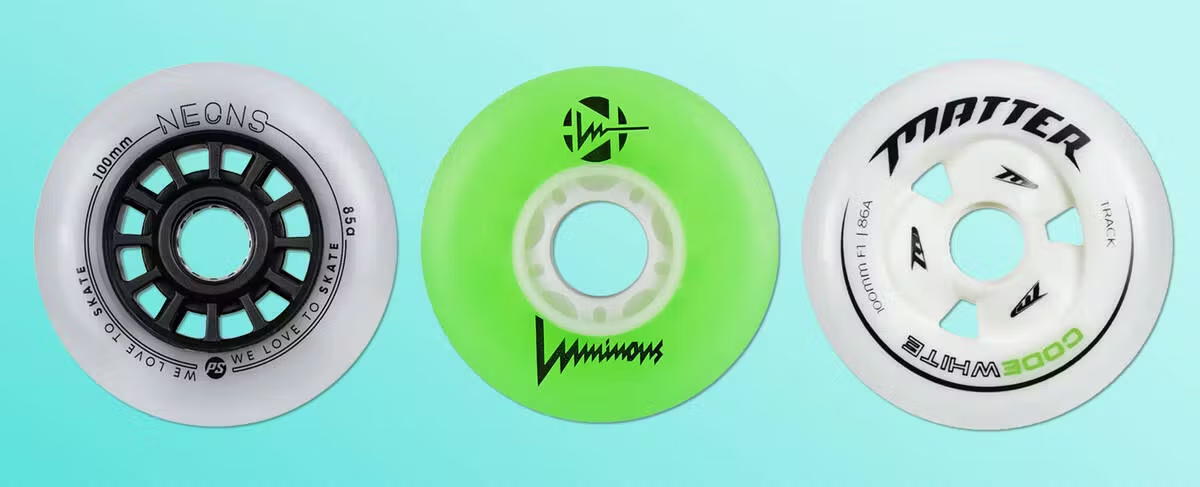
The wheel’s core, or hub, centers the bearings, typically crafted from durable plastics or aluminum.
Hub variants include:
- Solid core: Sturdy, heavier construction.
- Spoked core: Lightweight with moderate durability.
- Hollow core: Balances weight and durability.
Choosing lighter wheels conserves energy, enhancing performance and reducing fatigue.
Maintaining Inline skate Wheels
Wheel longevity can be optimised through mindful maintenance and rotation strategies, as wheels wear faster than other skate components.
Wheels often develop uneven wear, flattening diagonally. Regular rotation maintains a consistent shape, critical for optimal performance.
For guidance on wheel rotations, refer to our comprehensive guide:
If you are uncertain if it’s time to acquire new wheels for your inline skates, you should explore our guide on this topic:
In need of assistance with mounting your wheels? Here’s how you can do it:
For advice on the overall upkeep of inline skates, consult our online guide brimming with useful suggestions:
... How About Bearings?
We offer dedicated guides focusing on wheel bearings. This resource includes all the essential information on how they function:
If your ride doesn’t feel as smooth as before, your bearings might need attention. You should think about cleaning them thoroughly and applying some fresh lubricant: