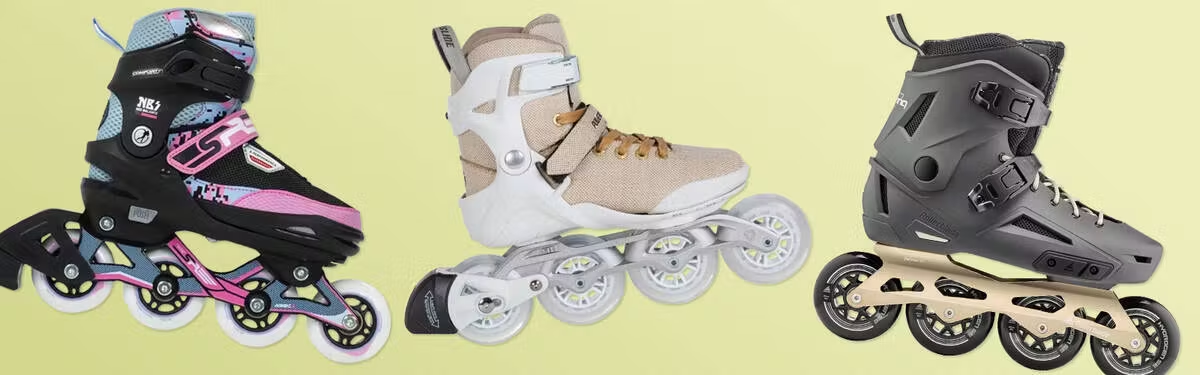
When in the market for the perfect inline skates for novices, it is vital to select a pair that ensures comfort and stability, promoting a positive skating journey. To guide you through the myriad of choices when picking your first inline skates, we have gathered some top insights in this handbook. Here, you will discover all the essential information to help you pick the ideal pair of beginner inline skates.
Within our range of inline skates, you'll encounter numerous outstanding options specifically designed for novices. Skates suitable for beginners generally belong to the categories of recreational or fitness inline skates. These classifications usually indicate that the skates are created for versatile, all-purpose use rather than focused activities like speed skating or aggressive skating. Perfect for transportation, exercise, and leisure, they offer an excellent mix of performance and comfort.
Overview
Overview

Which Inline skates Best Suit Beginners?
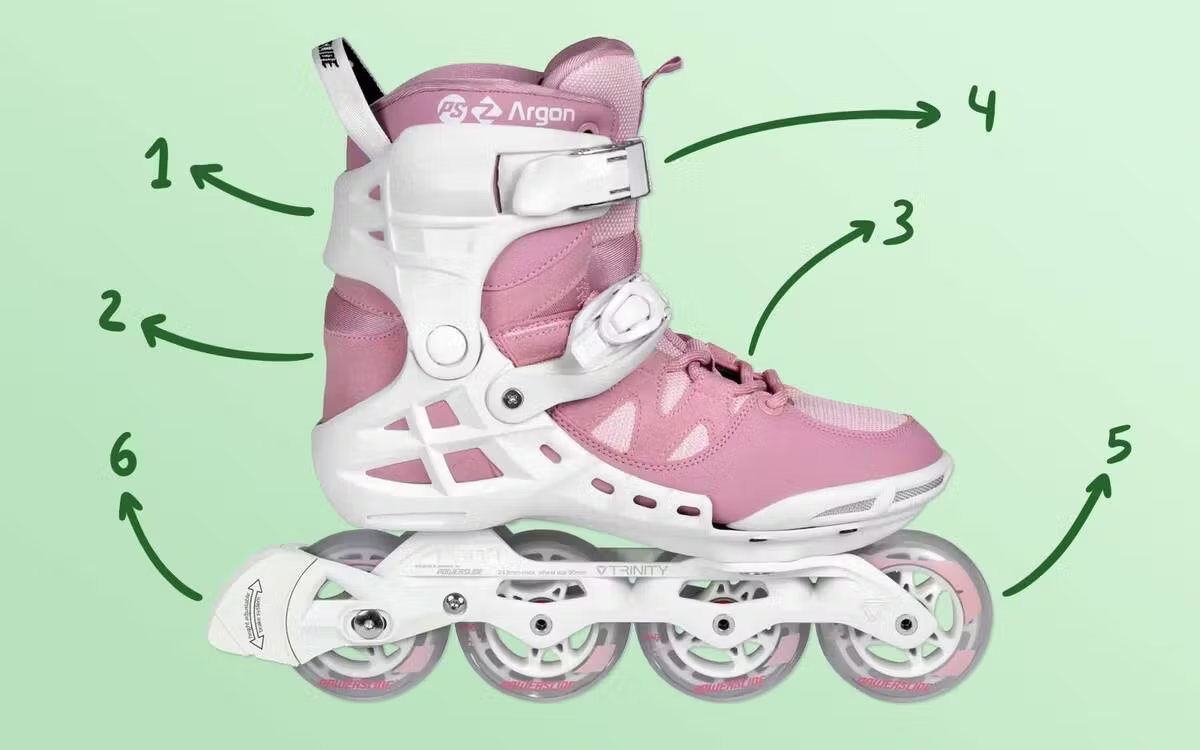
When selecting inline skates for beginners, consider these features for optimal performance and comfort:
- Elevated cuffs for lateral support: Provides stability and ankle support.
- Foam-lined breathable liners: Guarantees comfort and ventilation whilst skating.
- Lacing alternatives: Traditional laces, speed lacing, or BOA systems for a secure fit.
- Powerstrap with buckle: Secures your foot in place.
- Compact wheels (no larger than 90 mm in diameter): Ideal for novices, offering better control and maneuverability.
- Heel brake: To manage speed and ensure safe braking.
Our inline skate collection includes beginner-friendly models catering to all ages and preferences. Upon entering one of our inline skate categories, we advise using filters by skill level.
Determining the Correct Size for Beginner Inline skates
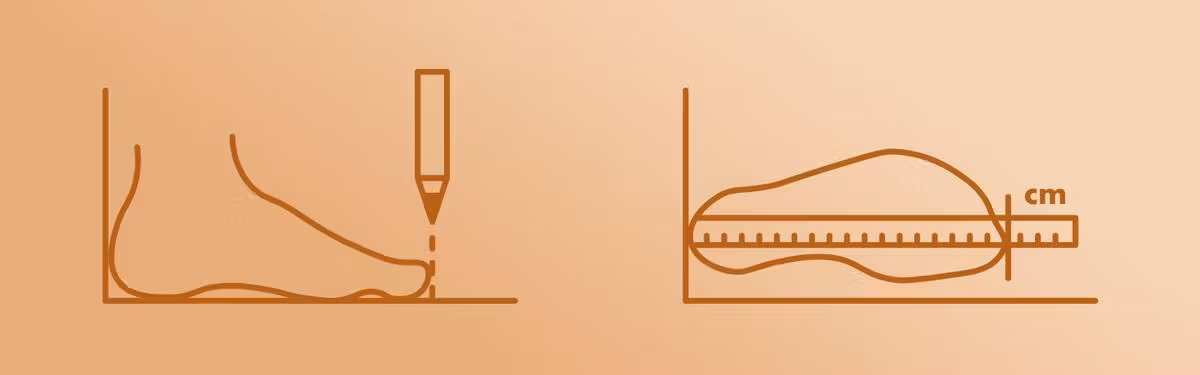
Securing the right size is crucial for your new skating adventure. When purchasing skates online, refer to the specific model's size guide and base your selection on precise foot measurements.
For precise foot measurement, start by placing your heel against a wall. Measure the distance from the wall to the tip of your longest toe, ensuring it's at a 90-degree angle from the wall.
Steps to Measure Your Feet Accurately
- Use a hard, flat surface: Stand on a level surface, against a wall to guarantee accurate measurements.
- Choose the socks you'll skate in: Wear the socks you intend to use with your skates when measuring.
- Position a sheet of paper against a wall: Place a paper on the floor with one edge alongside the wall.
- Stand upright: Stand upright with your heel touching the wall and your foot flat on the paper.
- Indicate the toe tip: Mark on the paper at your longest toe's tip.
- Measure both feet: Since one foot may be larger, measure both and use the larger size to select your skate size.
Using a ruler, measure the marked length of your foot on the paper. This is your Mondopoint size, which you'll refer to when interpreting the inline skate size charts.
Ensuring the Proper Fit for Inline skates
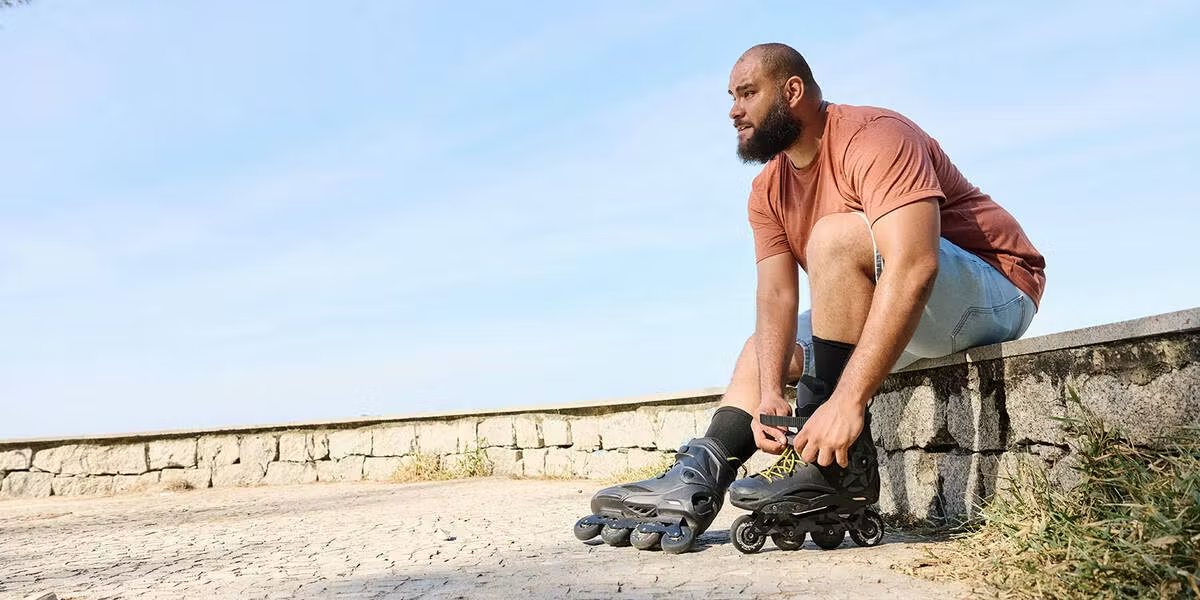
Skates should fit snugly without being uncomfortable, as a poor fit might hinder energy transfer from your legs. Consider these factors when trying on your initial pair:
- Adaptation Period: Skates often have a break-in phase. They may feel stiff initially but will become more comfortable with use.
- Heel Stability: Your heel should sit securely in the heel cup with minimal lift—this aids in control and lowers blister risk.
- Toes Position: Toes should be near the skate's tip but not cramped, allowing slight movement.
- Supporting the Ankle: The ankle should feel secure and supported, yet not so tight as to affect circulation. Knees should bend comfortably without excessive pressure on ankles.
- Fastening Mechanisms: Adjust laces, buckles, and straps to obtain a secure fit—tight enough for support while allowing proper blood circulation.
Getting Through the Break-In Period with Inline skates
When you start skating as a novice, your feet are not yet accustomed to the confines of skates. Even well-fitted skates have a break-in phase. For beginners, the skin on feet, ankles, and shins needs to build resilience.
Here are some strategies to soften the break-in process:
- Be Patient: It could take up to a month of skating to break in your skates, so begin with shorter sessions and gradually lengthen them. Initially, some discomfort is normal as your feet and ankles acclimate.
- Relax Your Feet: Focus on relaxing your feet while skating and resist the urge to over-tighten laces or straps.
- Blister Avoidance: Explore different socks for comfort. Insoles might be beneficial. Also, test out various socks; some may be more comfortable. Footies can significantly reduce heel and ankle blisters.
If pain persists, consult a medical professional. Enjoy progressing as your skates become an extension of your feet and skating style.
Access more insights in our article about insoles, footies, and acclimatising to new skates:
Braking Techniques for Beginners on Inline skates
Beginner skates typically feature brakes at the back in the form of a heel brake. This setup benefits novices as heel braking is more intuitive while learning control. Thus, traditional heel brakes offer a safer and simpler braking approach, greatly benefiting those new to inline skating.
Protective Equipment Required for Beginner Inline Skaters
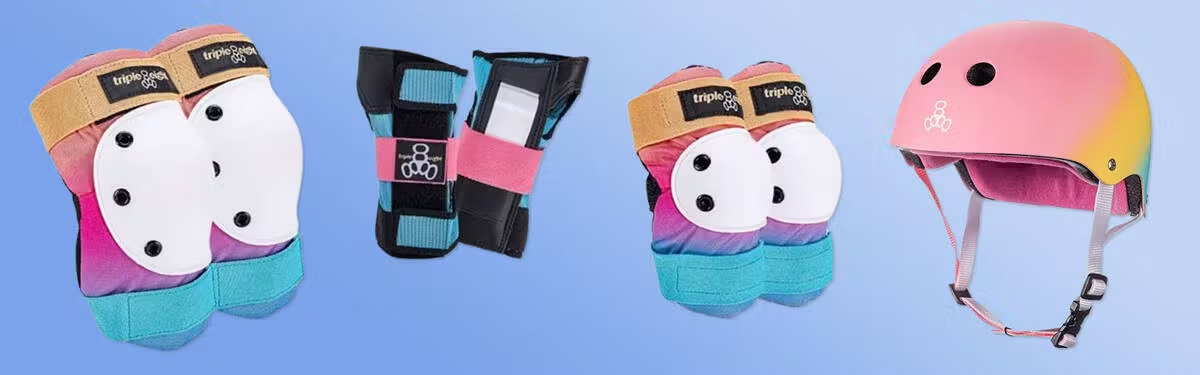
Wearing protective gear is fundamental for safety when inline skating. Here is a list of essential gear for beginners:
- Helmet: A properly fitted helmet is vital to safeguard your head from severe injuries.
- Wrist guards: Protects wrists by providing support and cushioning during falls.
- Knee pads: Shields knees from abrasions, bruises, and fractures.
- Elbow pads: Protects elbows from impacts and scrapes.
This safety gear is crucial in reducing injury risks and enhances your inline skating enjoyment.
Adopting protective gear is key to safely enjoying inline skating. We suggest that all novices invest in inline skating protection.